
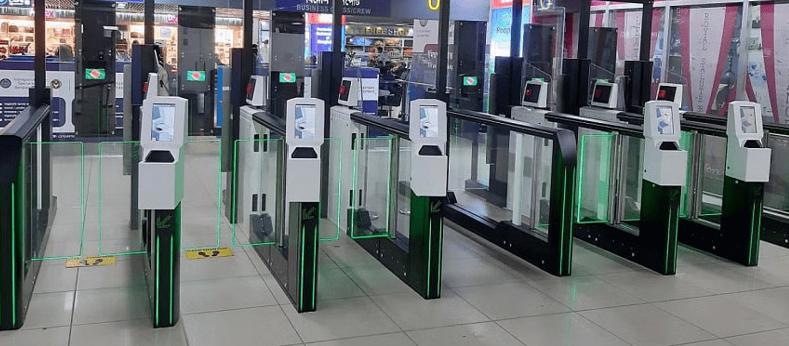
FAAN plans to unveil its vPASS biometric passenger-verification system on November 16, beginning with the domestic terminals in Lagos and Abuja. The technology will use NIN-linked facial verification, but passengers still need clear answers about data protection, registration, technical failures and alternative access procedures.
Passengers travelling through the domestic terminals of Nigeria’s two major international airports are preparing for a new identity-verification system that could change how they gain access to designated airport areas.
The Federal Airports Authority of Nigeria (FAAN) is scheduled to unveil its Airport Passenger Verification System, known as vPASS, on Monday, November 16, at Murtala Muhammed Airport in Lagos.
The system, developed in partnership with Verxid Technologies Limited, is designed to verify passengers through a one-time registration involving their National Identification Number (NIN) and facial verification.
Following registration, travellers will be able to use facial recognition technology at designated airport access points equipped with electronic gates.
FAAN says the initiative is intended to strengthen airport security, improve identity verification and make passenger processing more efficient.
The first phase is expected to cover the domestic terminals of Murtala Muhammed Airport in Lagos and Nnamdi Azikiwe International Airport in Abuja.
For passengers, however, the introduction of biometric verification raises important practical questions that should be answered clearly before the system becomes part of routine airport travel.
What exactly is vPASS?
vPASS stands for Airport Passenger Verification System.
It is a biometric identity-verification platform designed to establish a digital identity for passengers using facial recognition technology.
According to information released by FAAN, Nigerian passengers will complete a one-time registration using their NIN and facial verification. Their details will be authenticated against the relevant national identity database.
Once registered, passengers will be able to use facial recognition at designated electronic gates instead of repeatedly presenting physical identification documents at those particular access points.
The system is being developed with Verxid Technologies Limited as part of the Federal Government’s wider plan to modernise domestic airport operations.
The Federal Ministry of Information and National Orientation had previously reported that the Federal Government approved the vPASS project in April 2026 through a concession arrangement.
The November 16 event is therefore a scheduled unveiling of an already approved project, rather than the first announcement of the government’s intention to introduce biometric verification.
Which airports will use the system first?
FAAN says the first phase will cover two major airport locations:
- Murtala Muhammed Airport, Lagos: The domestic terminals in Lagos will form part of the initial rollout.
- Nnamdi Azikiwe International Airport, Abuja: The domestic terminals in the Federal Capital Territory will also be covered.
This means passengers should not automatically assume that the system will become operational at every Nigerian airport on November 16.
The announcement identifies the first-phase locations, but the full timetable for subsequent airports has not been established in the information reviewed for this report.
Travellers using other domestic airports should continue following the identification and security procedures communicated by their respective airlines and airport authorities.
Will passengers have to register with their NIN and face?
FAAN’s announcement describes a one-time registration process involving NIN and facial verification for Nigerian passengers.
The authority has encouraged passengers to register ahead of their flights to benefit from the proposed faster airport-access process.
However, the information released so far does not fully explain whether registration will be compulsory for every domestic passenger from the launch date, whether there will be a transition period or what alternative procedure will apply to passengers who cannot complete biometric enrolment.
These details are important.
A passenger should not have to discover an unfamiliar registration requirement only after arriving at the airport for a scheduled flight.
FAAN should therefore publish a clear passenger guide explaining the registration process, applicable terminals, effective dates and alternative arrangements before the system becomes a routine part of travel.
The biggest question: What happens to passengers’ biometric information?
The vPASS system will involve the processing of personal identity information and facial biometric data.
That makes data protection an important part of the project’s public accountability.
The Nigeria Data Protection Act 2023 establishes rules governing how personal data is collected, used, stored and protected.
Section 24 sets out data-protection principles, including fair, lawful and transparent processing, purpose limitation, data minimisation and appropriate security safeguards.
ALSO READ: NERC Approves ₦30bn for Free Electricity Meters: What Nigerian Customers Need to Know
Section 27 requires data controllers to provide important information before collecting personal data directly from an individual. This includes the identity of the controller, the purpose and lawful basis of processing, recipients of the data, applicable retention period and the individual’s data-protection rights.
These requirements make the following questions relevant to the vPASS implementation:
Who is the data controller?
Passengers should be told which organisation is legally responsible for determining the purposes and means of processing their biometric information. FAAN, the technology provider and any other participating organisation should have clearly defined responsibilities.
Where will biometric information be stored?
The public should receive clear information about the storage arrangements, security controls and whether any data will be processed or stored by third-party service providers.
How long will the information be retained?
Passengers should be informed of the applicable retention period and the conditions under which their biometric information may be deleted or retained.
Who can access the information?
There should be transparent information about the organisations and authorised personnel permitted to access passenger data and the circumstances in which access is allowed.
What happens if the system makes a mistake?
Facial-recognition systems may occasionally fail to match a legitimate passenger. There should be a clear procedure for manual verification and assistance so that a technical failure does not automatically prevent someone from travelling.
These questions do not establish that vPASS is unsafe or that FAAN has breached any law. They identify the information passengers reasonably need before entrusting a new system with sensitive identity information.
What rights do passengers have under Nigerian data-protection law?
The Nigeria Data Protection Act 2023 provides rights to individuals whose personal information is processed.
Depending on the circumstances, these include rights to information, access, rectification, erasure, restriction of processing and objection, subject to the applicable legal conditions.
The Act also requires organisations to establish an appropriate lawful basis for processing personal data.
Importantly, consent is not the only possible lawful basis under the Act. An organisation must identify and communicate the legal basis applicable to its particular processing activity.
Where processing relies on consent, the law provides requirements for consent to be freely and intentionally given, and for individuals to be informed of their right to withdraw it.
Passengers should therefore look for a clear vPASS privacy notice rather than assuming that every aspect of the system automatically depends on consent.
For questions or complaints about personal-data processing, the Nigeria Data Protection Commission is the national regulator responsible for data protection.
Will vPASS eliminate airport queues and repeated identity checks?
FAAN expects the technology to reduce dependence on physical identification documents at designated access points and improve passenger movement.
Electronic gates could make certain identity-verification procedures faster by allowing the system to compare a passenger’s facial information with the registered identity.
However, the new system should not be confused with a complete replacement for airport security screening.
Passengers may still be required to undergo other lawful checks involving aviation security personnel, airline staff and relevant government agencies.
The actual effect on waiting times will depend on how many electronic gates are installed, how many passengers register, the reliability of the equipment and the availability of trained personnel.
The public should therefore treat claims about faster processing as the intended benefit of the system until actual operational performance can be assessed.
What should passengers do before November 16?
Travellers using Lagos and Abuja domestic terminals should take the following practical steps:
- Follow official FAAN announcements about the vPASS launch and registration process.
- Confirm whether their departure terminal is included in the first phase.
- Keep their NIN and existing travel identification details available.
- Follow registration instructions only through channels confirmed by FAAN.
- Avoid giving NIN details, facial images or other personal information to unofficial agents claiming to represent the system.
- Check with their airline if they are uncertain about the identity-verification procedure for an upcoming flight.
- Allow sufficient time for airport procedures while the new arrangements are being introduced.
Passengers should not assume that the announcement means physical identification documents are no longer required for every airport procedure.
Five questions FAAN should answer before full implementation
For a system that will handle sensitive passenger identity information, public confidence will depend on more than the installation of electronic gates.
FAAN should make the following information readily available:
- Is vPASS registration compulsory for all domestic passengers, and from what date?
- What is the precise lawful basis for collecting and processing passenger biometric information?
- What is the retention period, and who can access the stored information?
- What alternative verification procedure will be available when facial recognition fails?
- What complaint and correction process will passengers use if their identity is incorrectly matched or their personal information is mishandled?
Clear answers will help passengers understand their obligations and rights while giving the public a basis for evaluating the system.
What happens next?
The Minister of Aviation and Aerospace Development, Festus Keyamo, is expected to unveil vPASS at Murtala Muhammed Airport on November 16.
The first phase is expected to cover the domestic terminals in Lagos and Abuja.
The launch should provide an opportunity for FAAN to explain the passenger registration process, demonstrate the technology and clarify the operational and data-protection arrangements.
For travellers, the success of vPASS should be measured not only by how quickly an electronic gate recognises a face but also by whether passengers can use the system reliably, obtain assistance when it fails and understand how their personal information is protected.
Nigeria’s airports may be entering a new era of biometric passenger verification. But a modern airport system must deliver two things together: effective security and transparent protection of the people whose identities it processes.
NaijaGistToday will follow the November 16 unveiling and report the official answers to the outstanding passenger and data-protection questions.
Sources
- Federal Airports Authority of Nigeria (FAAN), announcement on the planned November 16, 2026 vPASS unveiling, as reported by the News Agency of Nigeria.
- Federal Ministry of Information and National Orientation, April 9, 2026: “FG Unveils VPASS Biometric System To Transform Airport Security, Boost Revenue.”
- Nigeria Data Protection Act 2023, particularly Sections 24, 25 and 27.
- P.M. News, November 14, 2026: “FAAN unveils plan biometric passenger verification system at Airports.”
- Prompt News Online, November 13, 2026: “Aviation Minister to Launch vPASS at Lagos Airport.”