
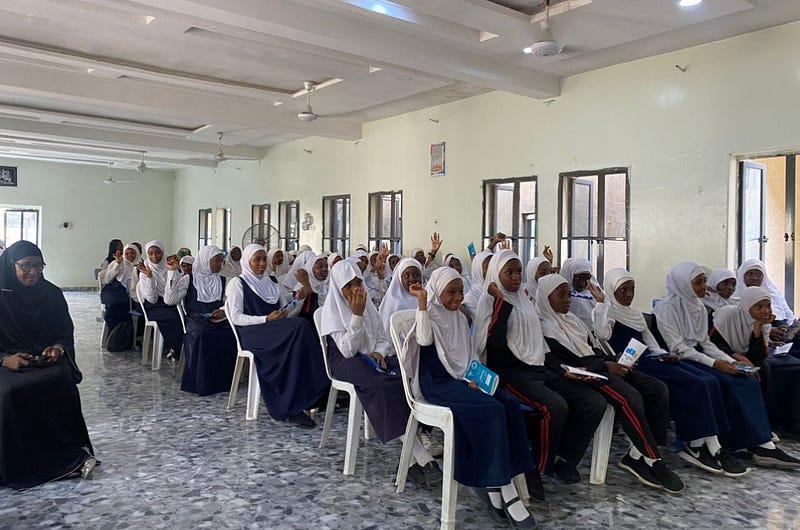
Twelve cases have been confirmed at First Lady’s College, Mariri, after health authorities investigated 313 suspected cases. The Kano State Centre for Disease Control says the school needs a mass vaccination exercise to protect its population of more than 2,000 students.
Health authorities in Kano State have confirmed 12 cases of diphtheria at First Lady’s College, Mariri, a boarding school in Kumbotso Local Government Area, raising fresh concerns about the protection of students against the potentially serious infectious disease.
The Director-General of the Kano State Centre for Disease Control (KNCDC), Professor Muhammad Adamu Abbas, disclosed the development to journalists in Kano.
According to reports of his briefing, the agency investigated 313 suspected cases and confirmed 12 infections following its response to the report received on Wednesday.
The health authority says it deployed a response team to the school, provided medication to suspected contacts and sensitised other students about the disease.
But the development has exposed another challenge: vaccine availability.
Abbas said the school, which has more than 2,000 students, needs a large-scale vaccination exercise, but the state agency does not currently have sufficient vaccine supplies for the proposed intervention.
The agency says it will request additional doses.
What happened at First Lady’s College?
The outbreak was reported at First Lady’s College, Mariri, in Kumbotso Local Government Area of Kano State.
The school is a boarding institution with a student population exceeding 2,000, according to reports of the health authority’s briefing.
The KNCDC said it received information about the suspected outbreak on Wednesday and immediately deployed a response team to investigate and contain further spread.
The Director-General disclosed that 313 suspected cases were investigated, with 12 cases confirmed.
This distinction is important: the 313 figure represents suspected cases investigated, not 313 confirmed infections.
The agency also said it had provided medication to suspected contacts and conducted awareness activities among students.
Why the vaccine shortage matters
The most significant concern raised by the KNCDC is the shortage of vaccines needed for a wider immunisation exercise at the school.
With more than 2,000 students in the boarding institution, health officials say a mass vaccination exercise is needed to strengthen protection against further infections.
However, the agency’s Director-General acknowledged that the available vaccine supply is insufficient for the required intervention.
This means the response involves more than treating the confirmed cases and monitoring suspected contacts. Health authorities also need sufficient vaccine supplies to protect students who may be vulnerable to the infection.
The state agency says it will seek additional vaccines.
The speed at which those supplies can be obtained and deployed will be an important part of the next phase of the response.
What is diphtheria and how does it spread?
Diphtheria is a bacterial infection caused by toxin-producing strains of Corynebacterium diphtheriae.
According to the World Health Organisation (WHO), the disease commonly affects the upper respiratory tract and can also affect the skin.
It can spread from person to person, particularly through respiratory droplets when an infected individual coughs or sneezes. Some infected people may have mild or no symptoms and can still transmit the bacteria.
Common symptoms include:
- Sore throat.
- Fever.
- Swollen glands in the neck.
- Weakness and general discomfort.
- Difficulty swallowing or breathing in severe cases.
In some respiratory infections, a thick grey coating can develop in the throat or nose. This can obstruct breathing and requires urgent medical attention.
Diphtheria can cause serious complications because the toxin produced by the bacteria may damage organs, including the heart and nerves.
The WHO identifies vaccination as the most effective way to prevent diphtheria.
What should parents and students do?
The Kano development is a reminder that parents and guardians should take childhood immunisation seriously.
Parents whose children attend boarding schools should confirm their vaccination histories and consult qualified healthcare professionals about any missing or overdue doses.
Anyone who develops symptoms consistent with diphtheria, particularly following a possible exposure, should seek prompt medical assessment.
Parents and guardians should also:
- Follow official instructions issued by the Kano State health authorities and school management.
- Avoid spreading unverified claims about the number of infections or alleged deaths.
- Seek professional medical advice if a child develops a persistent sore throat, fever, neck swelling or breathing difficulty.
- Ensure children receive age-appropriate diphtheria-containing vaccines according to the national immunisation schedule and professional advice.
- Cooperate with contact-management and vaccination arrangements announced by the health authorities.
Anyone experiencing difficulty breathing or swallowing should receive urgent medical attention.
Diphtheria is treatable, but early medical assessment is important. Treatment decisions, including antibiotics and diphtheria antitoxin where clinically indicated, must be made by qualified medical professionals.
What should Kano health authorities do next?
The confirmation of 12 cases makes the next stage of the response particularly important.
The KNCDC has identified the need for additional vaccines, but parents, students and the wider public will also need clear information about the progress of the response.
There are five issues that deserve close public attention:
1. Vaccine availability: How quickly can the state obtain the additional doses required for the school?
2. Student protection: What is the proposed vaccination timetable, and which students will be prioritised?
3. Contact monitoring: How will health officials continue identifying and following up people who may have been exposed?
4. Medical care: Are appropriate treatment facilities, medicines and clinical personnel available for anyone who develops the disease?
5. Transparent updates: Will the health authority provide regular information about new cases, recoveries and the progress of its containment activities?
These questions are important because a boarding school brings many students into close daily contact, making prompt public-health action particularly necessary.
The wider lesson for Nigeria’s schools
The Kano incident raises a broader question about the preparedness of Nigerian schools to respond to vaccine-preventable infectious diseases.
Schools need functioning health-reporting arrangements, access to qualified healthcare professionals and effective communication with parents and public-health authorities.
Boarding schools have an additional responsibility because students live together, share facilities and spend extended periods within the same environment.
The availability of vaccines and the strength of routine immunisation programmes are therefore important parts of school safety.
The WHO continues to emphasise vaccination, early case detection, contact tracing and timely treatment as essential components of diphtheria outbreak response.
What we know — and what remains unknown
Confirmed by the KNCDC, according to reports of its briefing:
- Twelve diphtheria cases have been confirmed at First Lady’s College, Mariri.
- The agency investigated 313 suspected cases.
- A response team was deployed following the initial report.
- Medication was provided to suspected contacts.
- Students received disease-awareness information.
- The health authority says additional vaccines are needed for mass immunisation.
ALSO READ: Nigeria Completes Ebola Monitoring for All 62 Contacts, Records No Secondary Transmission
Still requiring further official clarification:
- The latest number of students under active monitoring.
- The full vaccination status of the school population.
- The confirmed timetable for additional vaccine supplies.
- Whether the proposed mass vaccination exercise has commenced.
- Any subsequent changes in the number of confirmed cases.
NaijaGistToday will update this report when the health authority releases further verified information.
The central issue is now clear: Kano has confirmed 12 cases at a large boarding school, and its health authority says vaccine shortages are limiting the mass immunisation response it considers necessary. The speed and effectiveness of the next intervention will matter for the protection of the wider student population.
NaijaGistToday urges parents and guardians to rely on official health information and qualified medical professionals rather than unverified social-media reports.
Sources
- Kano State Centre for Disease Control, Director-General Professor Muhammad Adamu Abbas, as reported by the News Agency of Nigeria.
- The Guardian Nigeria, November 14, 2026: “Diphtheria outbreak resurfaces in Kano as authority confirms 12 cases.”
- P.M. News, November 14, 2026: “Diphtheria: Kano confirms 12 cases as MSF calls for increased vaccination.”
- TheCable, November 13, 2026: “Kano confirms 12 diphtheria cases at girls’ boarding school.”
- World Health Organisation, July 15, 2026: Diphtheria fact sheet.