
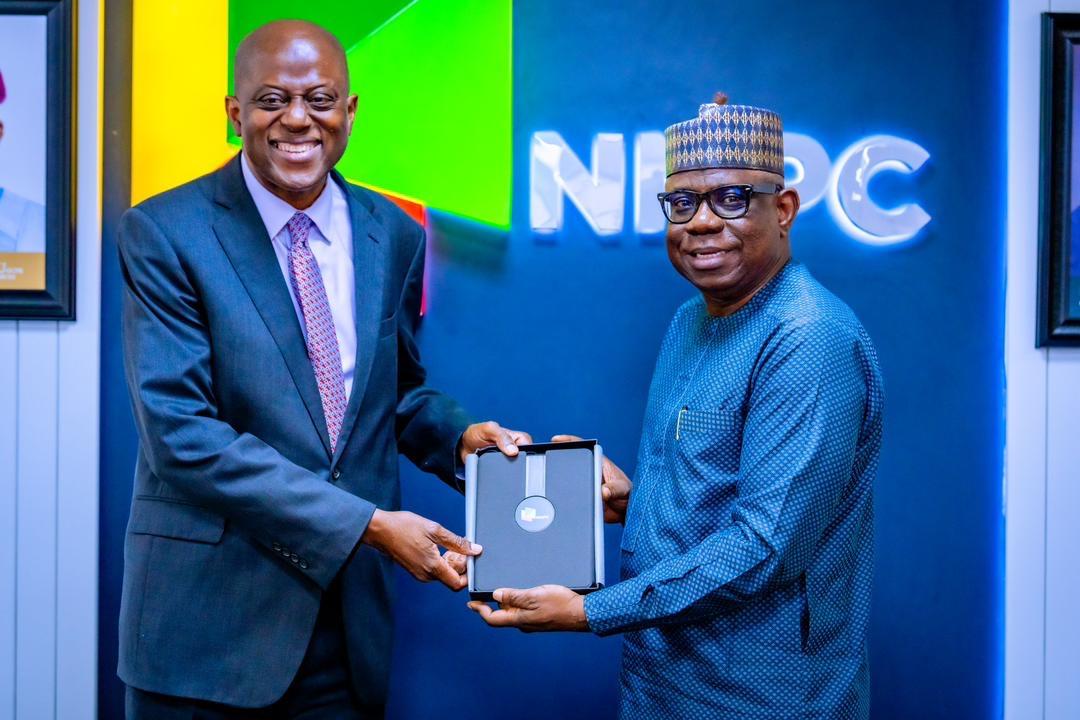
The agreement is designed to improve oil-export proceeds, foreign-exchange inflows and energy-project financing. But Nigerians should not mistake the new framework for an immediate promise of a stronger naira, cheaper petrol or higher oil production.
Nigeria’s national oil company and its central bank have signed a new agreement intended to improve how the country’s oil and gas earnings are managed, transferred and used to support investment in the energy sector.
The Nigerian National Petroleum Company Limited (NNPC) and the Central Bank of Nigeria (CBN) signed a Memorandum of Understanding (MoU) at the CBN headquarters in Abuja on Wednesday, November 18.
In a statement published by NNPC, the company said the agreement would establish a more structured relationship between the national energy company and the country’s monetary authority.
The proposed areas of cooperation include foreign-exchange inflows from oil and gas exports, financial discipline, domestic payments, contractor settlements, foreign-exchange conversions and financing structures for energy projects.
The agreement is significant because oil and gas earnings remain important to Nigeria’s public finances and foreign-exchange supply.
However, the immediate question for Nigerians is what the agreement will actually deliver.
Will it improve the availability of foreign currency? Will it make oil revenue transfers more transparent? Can it attract investment into production? And will any of these changes eventually affect the wider economy?
The answers depend on implementation, not simply the signing of the agreement.
What exactly have NNPC and CBN agreed to do?
According to NNPC’s official announcement, the MoU provides a framework for cooperation between the two institutions.
NNPC Group Chief Executive Officer, Bashir Bayo Ojulari, described the agreement as a structured relationship intended to bring energy-sector activities into closer alignment with national monetary and financial objectives.
The company identified several objectives.
First, the institutions intend to address challenges affecting trade and foreign-exchange transactions, particularly the movement of export proceeds into the Nigerian economy.
Second, they intend to improve coordination around financial structures that could enable NNPC to raise capital using its balance sheet and assets, with guidance from the CBN.
Third, NNPC says domestic payments, contractor settlements and foreign-exchange conversions will be aligned with CBN regulations.
The agreement is also intended to improve financial discipline and support more predictable management of oil and gas earnings.
These are important objectives, but they should be understood as the purposes of the agreement rather than results already achieved.
Why does the agreement matter for the naira?
Nigeria needs reliable foreign-exchange inflows to support international trade, meet legitimate foreign-currency obligations and strengthen confidence in its financial system.
Oil and gas exports are an important potential source of those inflows.
When export proceeds are received, converted, transferred and accounted for through predictable arrangements, the financial system can benefit from improved visibility and coordination.
NNPC says the new framework is intended to address challenges affecting foreign-exchange inflows and improve the repatriation of export proceeds.
CBN Governor Olayemi Cardoso said improved account management, funds transfers and liquidity support could contribute to macroeconomic stability by helping ensure predictable foreign-exchange inflows.
However, a more structured agreement does not automatically create additional dollars.
The actual effect on the naira will depend on the volume of export earnings, the timing of remittances, the amount of foreign currency retained or converted, wider market demand and other economic conditions.
For that reason, Nigerians should not interpret the signing as an announcement that the naira will immediately strengthen against the dollar.
The meaningful test will be whether the new arrangements produce measurable improvements in foreign-exchange inflows and the management of oil proceeds.
What happens to oil-export earnings under the new framework?
One of the central issues is the management and repatriation of proceeds from Nigeria’s oil and gas exports.
NNPC says the agreement is intended to support a more structured approach to these transactions.
The company’s Group Chief Financial Officer, Adedapo Segun, said the arrangement would replace the previous practice of handling some financial issues through irregular arrangements.
He also said NNPC and the CBN had agreed to establish working groups, implementation timelines and accountability mechanisms.
These arrangements will be important because an MoU can set out broad principles, but the practical value depends on whether the institutions follow through with clear procedures.
For citizens and investors, the questions that matter include:
- How will export proceeds be monitored and reconciled?
- What reporting arrangements will make remittances easier to scrutinise?
- How will foreign-exchange conversions be handled?
- What accountability measures will apply when agreed procedures are not followed?
- How will the public know whether the arrangement is improving revenue management?
The two institutions have announced the intention to strengthen coordination. Detailed public performance indicators and measurable implementation results will be needed to demonstrate whether the framework is working.
Can the agreement increase Nigeria’s oil production to three million barrels per day?
NNPC’s Group Chief Financial Officer said improved financial coordination could help attract investment needed to increase production from what the company described as a current level of 1.8 million barrels per day towards three million barrels per day.
This is an important ambition, but it must be interpreted carefully.
The agreement does not itself increase oil production.
Higher output requires investment in oil fields, pipelines, maintenance, security, infrastructure, drilling, technology and the resolution of operational constraints.
It also depends on the ability of producers to sustain production and deliver crude to export terminals or domestic refineries.
The financing framework could support some of the investment required, but the production target remains an objective rather than an achieved result.
NNPC will need to provide regular production figures so Nigerians can assess whether output is moving towards the stated ambition.
Could the agreement make petrol cheaper?
There is currently no basis for promising Nigerian consumers that the MoU will immediately reduce petrol prices.
The agreement concerns financial coordination, oil and gas revenue management, foreign-exchange inflows and energy financing.
Petrol prices are influenced by several other factors, including crude oil prices, refining costs, product supply, transportation, exchange rates, distribution expenses and market competition.
Improved foreign-exchange management could potentially contribute to a more stable economic environment over time.
But the agreement does not announce a new petrol pricing formula, a reduction in pump prices or a direct subsidy arrangement.
Consumers should therefore wait for actual market developments rather than expect an immediate price reduction simply because the two institutions have signed an MoU.
Why NNPC wants to raise capital using its own assets
Another important feature of the agreement is its reference to helping NNPC develop financial structures that allow it to raise capital on the strength of its balance sheet and assets.
This could provide a route for financing energy projects without relying entirely on conventional government funding.
ALSO READ: Nigeria’s Inflation Falls to 14.06%, but Food Prices Remain High
For an energy company with substantial assets and large investment requirements, the ability to structure financing around its own balance sheet could potentially widen access to capital.
However, asset-backed financing also requires careful financial management.
Investors and the public should understand the assets being used, the obligations created, the cost of borrowing, the repayment arrangements and the risks involved.
The CBN’s role in providing guidance does not mean it has guaranteed NNPC’s future borrowing or agreed to finance every proposed project.
The actual financing arrangements will need to be assessed individually when they are disclosed.
What has the CBN said?
CBN Governor Olayemi Cardoso described the agreement as a formalisation of an existing relationship between the monetary authority and the national oil company.
He emphasised the importance of efficient account management, funds transfers and liquidity support.
His explanation points to the importance of predictable financial flows between the oil sector and the wider economy.
For the CBN, the broader objective is to support macroeconomic stability through improved financial coordination and more predictable foreign-exchange inflows.
However, monetary stability also depends on factors beyond NNPC’s operations, including monetary policy, domestic liquidity, exports outside the oil sector, investor confidence and demand for foreign currency.
The MoU should therefore be regarded as one component of a wider economic and financial management effort.
Five things Nigerians should monitor after the signing
The success of the agreement should be measured by practical results rather than announcements.
There are five important indicators to watch.
1. Foreign-exchange remittances
Does the new framework lead to more predictable and transparent movement of oil and gas export proceeds into the Nigerian economy?
2. Oil production
Does investment improve sufficiently to move production towards the three-million-barrel-per-day ambition stated by NNPC?
3. Financial accountability
Do the working groups, implementation timelines and accountability arrangements produce clear and verifiable reporting?
4. Energy-project financing
Does NNPC secure new financing for viable projects, and are the financial obligations and risks properly disclosed?
5. Economic impact
Do improvements in foreign-exchange management and energy investment contribute to broader economic stability over time?
These indicators would provide a stronger basis for judging the agreement than simply counting the number of official statements issued after its signing.
What happens next?
NNPC says the agreement includes working groups, implementation timelines and accountability mechanisms.
The company’s Treasurer, John Etukudo, is expected to oversee implementation on behalf of NNPC.
The next important development will be the publication of more detailed implementation information and evidence that the agreed financial procedures are being applied.
The two institutions will also need to explain how progress will be measured and how the public can assess the results.
For investors, the focus will be on whether the arrangement helps unlock financing for energy projects and improves the management of export proceeds.
For ordinary Nigerians, the most relevant question is whether better management of oil-sector earnings eventually contributes to stronger foreign-exchange availability, greater economic stability and improved investment.
The NNPC–CBN agreement could become an important part of Nigeria’s energy-finance reforms. But its success will not be determined by the signing ceremony. It will be determined by the money that is properly accounted for, the investment that is actually mobilised and the measurable improvements that follow.
NaijaGistToday will monitor the implementation of the agreement, NNPC’s oil-production figures, foreign-exchange remittance developments and any further disclosures from the CBN.