
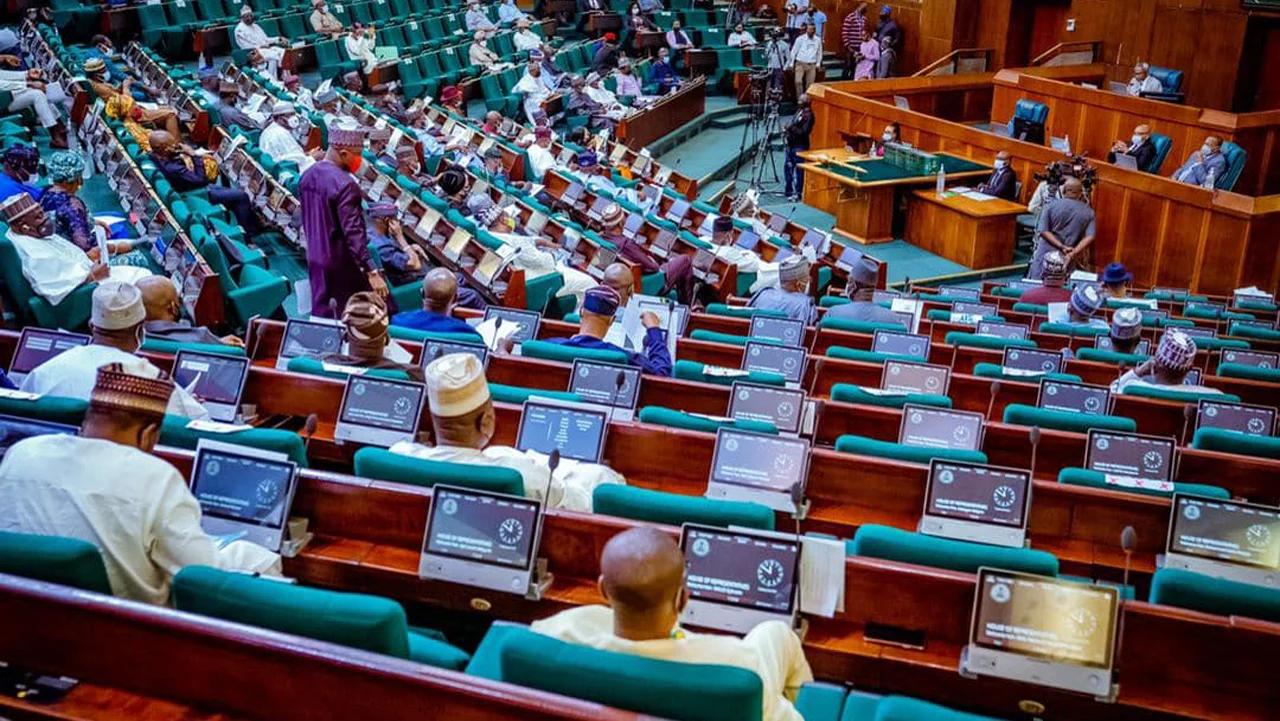
Senate Leader Opeyemi Bamidele says 32 State Houses of Assembly have approved the proposed constitutional amendment, with four outstanding assemblies expected to submit their reports by November 17. But questions remain about the final framework, funding, command structure and safeguards against political interference.
Nigeria’s long-running debate over the establishment of State Police has reached a decisive stage, with Senate Leader Opeyemi Bamidele saying that 32 of the country’s 36 State Houses of Assembly have approved the proposed constitutional amendment.
Bamidele says the four remaining assemblies have until Tuesday, November 17, to submit their reports as the National Assembly prepares to resume legislative business.
The development brings the proposed reform closer to the next stage of the constitutional alteration process after more than 15 years of debate over whether Nigeria should move away from its highly centralised policing structure.
ALSO READ: Nigeria’s New Airport Face-Recognition System Launches Monday
However, while the reported level of state support represents a major development, it does not mean that State Police services are already operational.
The proposed framework still requires the completion of the applicable constitutional and legislative procedures, clarification of its implementation arrangements and the establishment of institutions capable of exercising effective oversight.
For Nigerians concerned about kidnapping, banditry, terrorism, communal violence and other security challenges, the central question is now shifting from whether the country needs decentralised policing to how such a system will be controlled, funded and held accountable.
What has happened?
Senate Leader Opeyemi Bamidele disclosed the latest position in a statement issued on Sunday, November 15, following his recognition at The Sun Senator of the Year Award ceremony.
He said no fewer than 32 State Houses of Assembly had approved the State Police Constitution Alteration Bill, 2026.
According to him, the National Assembly had crossed the constitutional threshold required under Section 9(2) of the 1999 Constitution.
Bamidele said the four remaining assemblies were expected to submit their reports on or before the National Assembly’s resumption on November 17.
He also maintained that the absence of the remaining reports would not prevent the National Assembly from proceeding with the next stage of the process.
The proposed amendment is intended to establish a Federal Police Service alongside State Police Services, creating a constitutional basis for states to establish their own policing institutions.
Why the 32-state figure matters
Section 9(2) of the 1999 Constitution provides that a constitutional alteration of this category requires approval by at least two-thirds of the members of each chamber of the National Assembly and resolutions from at least two-thirds of the 36 State Houses of Assembly.
That state-level threshold is 24 assemblies.
The Senate Leader’s reported figure of 32 therefore exceeds the minimum state approval requirement.
However, there is an important development in the reporting history that deserves clarification.
On November 3, the Clerk to the National Assembly announced that 28 state assemblies had submitted verified approvals. On November 15, Bamidele reported that the number had risen to 32.
The difference may reflect additional approvals received and processed between the two announcements. However, the complete updated state-by-state verification record was not available in the material reviewed for this report.
ALSO READ: INEC’s November 28 Mock Election: The Five Things Nigerians Should Watch Before 2027
The National Assembly should publish the latest verified register so that citizens can independently establish which assemblies approved the proposal and the dates on which their resolutions were received.
The biggest question: What exactly will the new State Police system look like?
The public debate has largely focused on whether Nigeria should establish State Police.
But the details of the proposed structure will determine whether the reform improves security or creates additional governance problems.
The proposed arrangement has been described as providing for a Federal Police Service and State Police Services.
Premium Times has reported provisions involving state governors’ roles in appointing commissioners of police, subject to specified institutional recommendations and legislative confirmation.
The Senate Leader has also argued that the reform is intended to establish community-based policing under constitutional safeguards rather than create ethnic or state-controlled armies.
Yet the public needs access to the final legislative text to understand the complete institutional design.
Several questions deserve clear answers:
Who will appoint and remove state commissioners of police?
The appointment process will be central to determining the independence and professionalism of state police commands.
Citizens need to understand the respective roles of governors, police service commissions and state legislatures.
Who will investigate abuses by state police officers?
A new policing structure must include independent complaint mechanisms, disciplinary procedures and effective investigation of allegations of unlawful detention, assault, intimidation or excessive force.
Who will finance the system?
State governments will need adequate and sustainable funding for recruitment, training, equipment, vehicles, communication systems, forensic capacity and operational infrastructure.
How will the Federal Police and State Police work together?
The framework must clarify jurisdiction, intelligence sharing, inter-state operations and the handling of crimes that cross state boundaries.
What prevents political misuse?
The public needs safeguards against the use of police institutions to intimidate political opponents, journalists, protesters or citizens exercising their lawful rights.
These are not arguments against State Police. They are questions that any credible constitutional reform should answer.
Why public access to the final bill matters
THISDAY reported on November 16 that important details of the proposed framework remained unclear, including its structure, funding, oversight and operational safeguards.
That concern deserves attention.
A constitutional amendment affecting the country’s policing system should not be judged only by the number of state assemblies that approve it.
Citizens should be able to examine the final text and understand the powers being created, the limits imposed on those powers and the institutions responsible for enforcing accountability.
Public access to the final text would also allow civil-society organisations, legal experts, security professionals, state governments and citizens to assess whether the proposed safeguards are adequate.
The National Assembly should therefore make the final approved version and accompanying explanatory documents readily accessible.
An important procedural question still needs clarification
There is also a point about the next constitutional step that should not be glossed over.
Recent statements attributed to the Senate Leader refer to transmitting the proposed constitutional alteration to President Bola Tinubu for assent.
However, the National Assembly’s published explanation of the constitutional alteration process states that presidential assent is not required for a Section 9 constitutional alteration once the applicable legislative and state-assembly requirements have been satisfied.
Section 9(2) itself sets out the required legislative and state-assembly approvals.
The relationship between the Senate Leader’s announced transmission plan and the National Assembly’s published explanation therefore requires an authoritative procedural clarification.
NaijaGistToday has not independently resolved that discrepancy and will not present the proposed amendment as an enacted constitutional change.
The National Assembly should explain the precise legal and administrative steps that remain before the alteration can take effect.
Will State Police automatically solve Nigeria’s insecurity?
The establishment of State Police could bring policing closer to local communities and improve the ability of authorities to respond to security problems that require local knowledge.
Supporters argue that state-level institutions could strengthen intelligence gathering, community relationships and responses to crimes occurring within particular jurisdictions.
But decentralisation alone cannot guarantee better security.
A poorly funded police service, weak oversight, inadequate training or political interference could create new problems.
ALSO READ: NERC Approves ₦30bn for Free Electricity Meters: What Nigerian Customers Need to Know
The effectiveness of the reform will depend on the quality of the legislation, the independence of oversight institutions, recruitment standards, operational funding and cooperation between federal and state authorities.
It will also depend on whether citizens can report misconduct and obtain remedies when their rights are violated.
What happens next?
The four outstanding State Houses of Assembly are expected to submit their reports by Tuesday, November 17, according to the Senate Leader.
The National Assembly is also expected to resume legislative business on that date.
The next important developments will include publication and verification of the final state approvals, clarification of the remaining constitutional procedure and public access to the final approved text.
Until the applicable process is completed and the relevant constitutional alteration is formally brought into effect, Nigerians should not assume that state police services are already authorised to begin operating.
What Nigerians should demand before implementation
The proposed reform deserves serious public scrutiny because it concerns one of the most important responsibilities of government: the protection of lives and property.
The National Assembly and relevant institutions should make the following information available:
- The final text of the State Police constitutional amendment.
- The verified list of approving State Houses of Assembly and their resolutions.
- The proposed appointment, discipline and removal procedures for state police leadership.
- The financial and operational responsibilities of federal and state governments.
- Independent oversight, complaint and human-rights protection arrangements.
- Rules governing cooperation between Federal Police and State Police services.
- A clear implementation timetable and transition plan.
The reform should be measured by whether it creates a professional, accountable and effective policing system—not simply by how quickly it passes through the legislative process.
Nigeria may be approaching a historic change in its policing structure. But the real test will be whether the final law protects citizens as effectively as it empowers the institutions responsible for protecting them.
NaijaGistToday will continue to follow the National Assembly’s resumption on November 17, the outstanding state resolutions and the publication of the final State Police framework.
Sources
- Senate Leader Opeyemi Bamidele’s statement of November 15, 2026, as reported by The Punch, The Sun and Premium Times.
- National Assembly Clerk’s November 3, 2026 statement on verified state approvals.
- THISDAY, November 16, 2026: “Details Remain Elusive as State Police Bill Goes to Tinubu This Week.”
- Premium Times, November 15, 2026: “State Police: Four States Yet to Transmit Resolutions to NASS – Senate Leader.”
- Constitution of the Federal Republic of Nigeria 1999, Section 9(2).
- National Assembly’s published constitutional alteration process guidance.