
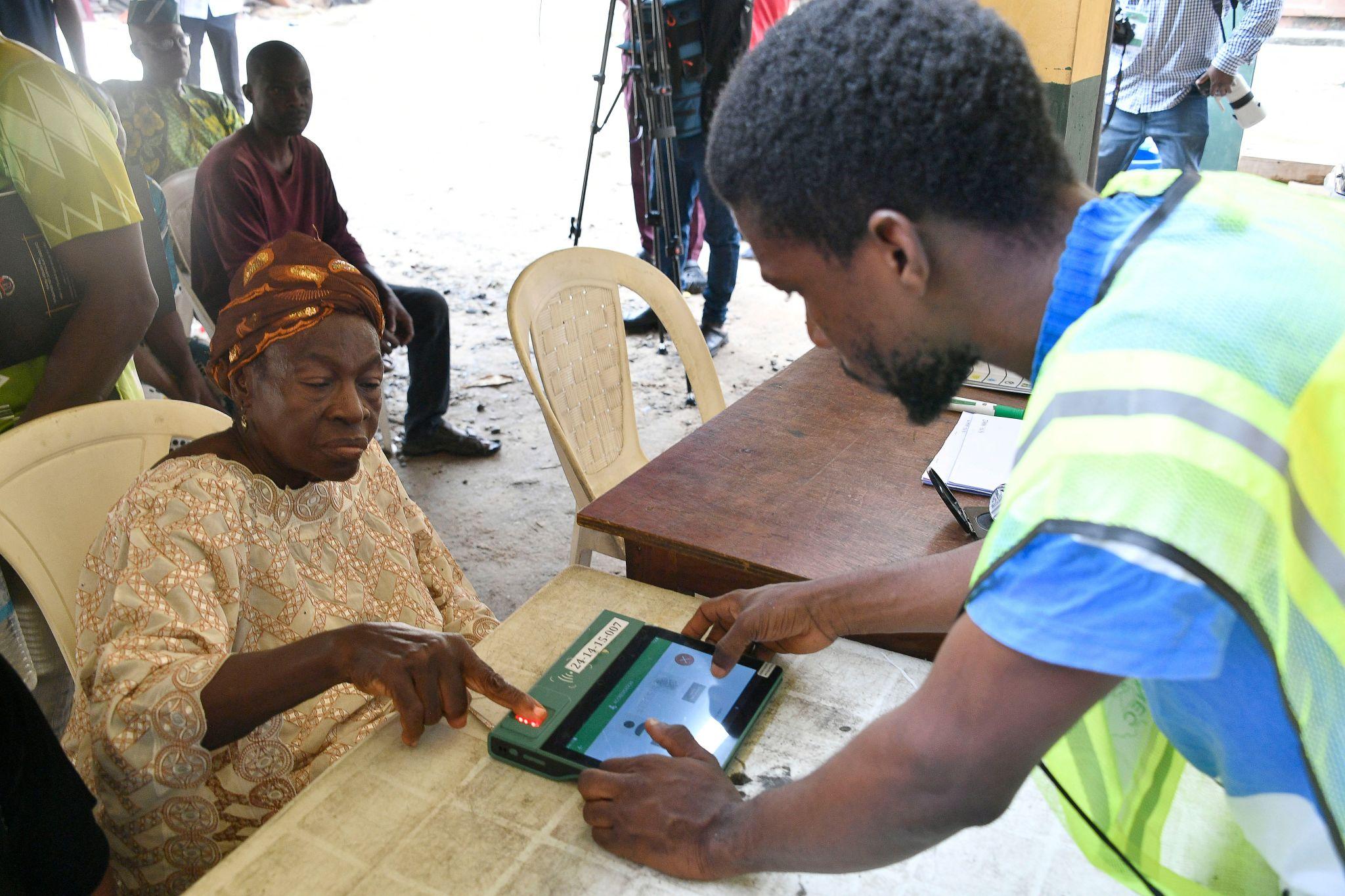
The electoral commission says it has upgraded BVAS, reduced the voter load assigned to each device and introduced safeguards against inaccurate result uploads. But the nationwide simulation will provide an important opportunity to test whether these changes work together.
By NaijaGistToday Newsroom
Saturday, November 14, 2026 | 2:59 PM WAT
Nigeria’s preparations for the 2027 general elections will reach an important technical milestone on November 28, when the Independent National Electoral Commission (INEC) conducts a nationwide mock accreditation and voting exercise.
The exercise is intended to test upgrades to the Bimodal Voter Accreditation System (BVAS), the electronic transmission of polling-unit results and other components of the electoral process ahead of the presidential election scheduled for January 16, 2027.
But the significance of the exercise goes beyond testing whether an accreditation machine can recognise a registered voter.
INEC Chairman, Professor Joash Amupitan, says the commission has introduced additional technical safeguards designed to prevent inaccurate polling-unit results and figures indicating over-voting from being uploaded to its Result Viewing Portal, commonly known as IReV.
The commission has also reduced the maximum number of registered voters assigned to a single BVAS device from 1,250 to 850.
These changes raise an important question for Nigerian voters: can INEC demonstrate that the technology, verification procedures and electronic result-management arrangements will operate reliably when the country goes to the polls?
Why November 28 matters
INEC announced the mock exercise following the chairman’s address at Chatham House in London on November 12, during a dialogue organised in partnership with the Kimpact Development Initiative.
According to the commission, the nationwide exercise will simulate the presidential election and allow it to assess the effectiveness of its accreditation and electronic result-transmission systems.
The exercise comes as INEC seeks to address operational and credibility concerns associated with the 2023 general elections.
The chairman acknowledged that controversies surrounding the previous presidential election created a serious trust deficit for the commission.
The November 28 simulation is therefore an opportunity to test whether the changes introduced since then can address some of the weaknesses identified by the electoral body.
1. The new BVAS limit: 850 voters per device
One of the most significant technical adjustments announced by INEC is the reduction in the maximum number of registered voters assigned to a single BVAS device.
Under the new arrangement, each device will be assigned a maximum of 850 registered voters, compared with the previous limit of 1,250.
INEC says polling units with more than 850 registered voters will receive additional devices.
The adjustment is intended to reduce pressure on individual machines and improve the efficiency of voter accreditation.
For voters, the practical issue is whether the additional devices will be properly deployed, tested and supported with adequate power, connectivity and trained personnel.
A lower voter allocation may help reduce equipment pressure, but it cannot by itself guarantee a smooth accreditation process.
2. Can inaccurate results be stopped before reaching IReV?
The second major issue concerns electronic result transmission.
INEC says it has developed technical safeguards intended to prevent inaccurate polling-unit results and figures indicating over-voting from being uploaded to its Result Viewing Portal.
The chairman said the commission’s post-2023 assessment identified significant weaknesses in result management, particularly at collation centres.
The new safeguards, according to INEC, are intended to introduce validation checks before results are uploaded.
This is particularly important because IReV provides a platform through which citizens and election observers can view polling-unit result information.
However, the public should distinguish between a safeguard announced by INEC and one whose performance has been independently demonstrated.
The November 28 exercise should provide an opportunity to assess whether the announced validation procedures function as intended.
3. Climate-controlled storage for election equipment
INEC has also identified equipment storage and environmental conditions as issues requiring attention.
The chairman said extreme temperatures and inadequate storage conditions contributed to BVAS-related problems during the 2023 elections.
To address this concern, the commission says it is constructing climate-controlled storage facilities across the states of the federation.
The purpose is to improve the conditions under which sensitive election equipment is stored.
The practical test will be whether the facilities are completed, operational and capable of supporting the equipment-management requirements of the election.
4. Additional devices and operational readiness
INEC says it has procured additional BVAS devices as part of its preparation for the 2027 elections.
The additional equipment is expected to support the revised allocation of no more than 850 registered voters per device.
However, procurement is only one part of election readiness.
The devices must also be configured, tested, distributed and supported by trained election personnel.
The November 28 exercise will therefore be important for identifying technical or operational problems that may not be obvious from procurement figures alone.
5. The outstanding election budget remains important
The INEC chairman also disclosed that the commission had received a substantial portion of its approved 2027 election budget but was still awaiting the release of the outstanding balance.
He said part of the outstanding funds would be needed for the recruitment and welfare of ad hoc election personnel.
According to his statement, INEC had received assurances that the balance would be released before the end of November.
Funding matters because election technology cannot operate independently of logistics, staffing, transportation, training and other essential arrangements.
The commission has identified insecurity, logistics and result management as three of its major operational priorities ahead of the elections.
What should Nigerians look for on November 28?
The mock exercise should be judged by what it demonstrates, not simply by the fact that it takes place.
There are five practical issues Nigerians and election observers should watch:
First, accreditation reliability. Do the upgraded BVAS devices identify eligible voters accurately and consistently?
Second, device capacity. Does the revised limit of 850 registered voters per device reduce delays and equipment pressure?
Third, result validation. Do the new safeguards identify inaccurate figures and entries indicating over-voting before upload?
Fourth, electronic transmission. Can polling-unit results move through the required electronic process without unexplained failures or discrepancies?
ALSO READ: Rivers Extends Private School Census Deadline to November 14
Fifth, transparency and reporting. Will INEC explain what the exercise tested, what problems emerged and what corrective steps will follow?
These are the issues that can turn a technical demonstration into a meaningful public test of electoral preparedness.
What has INEC not yet clarified publicly?
The announcement reviewed for this report does not provide a complete operational guide for members of the public.
In particular, the statement does not specify all participating polling-unit locations, the precise timetable for the exercise, whether ordinary voters will be invited to participate at every location or the detailed public reporting arrangements for the results of the simulation.
Those details matter.
Without them, Nigerians should not assume that every registered voter is expected to report to a polling unit on November 28.
Voters should wait for further official instructions from INEC before making travel or participation arrangements.
The bigger question: Can technology restore public confidence?
Nigeria’s electoral credibility cannot depend on machines alone.
Technology can support accreditation, validation and result transmission, but credible elections also require transparent procedures, competent personnel, adequate logistics, security, accountability and compliance with electoral law.
The 2027 elections will be judged not only by whether INEC deploys upgraded equipment but also by whether the entire process is conducted in a manner that citizens, political parties and observers can scrutinise.
The November 28 mock exercise is an opportunity for the commission to demonstrate progress before the pressure of election day arrives.
For Nigerians, the most important question is not whether INEC has purchased more devices or announced new safeguards. It is whether those measures can work reliably, transparently and consistently when the actual votes are being counted and transmitted.
The November 28 exercise should provide the first major nationwide opportunity to test that promise before the 2027 general elections.
NaijaGistToday will continue to monitor INEC’s announcements, the November 28 simulation and subsequent election-readiness updates.
Sources
- Independent National Electoral Commission, official press statement: “Why Nigerians Should Trust the Commission – Prof. Amupitan”, November 13, 2026.
- Vanguard, November 14, 2026: “2027: INEC sets Nov 28 for nationwide mock election.”
- Premium Times, November 13, 2026: “2027: INEC schedules mock accreditation, to launch new safeguards.”
- Channels Television, November 12, 2026: “INEC Fixes Nov 28 For Nationwide Mock Accreditation Ahead Of 2027 General Elections.”